“Just Map It Out”
- Michael Gaw
- May 11
- 7 min read
Just Map It Out — The Truth About Modern DPF Problems

The internet’s favourite diesel “repair” seems to be:
- “Just delete it.”
- “Gut the DPF.”
- “Map it out mate.”
- “Problem solved.”
At Prestige Performance Group in Newtownards, Northern Ireland, we hear these comments every single day whenever a vehicle develops a DPF fault.
But here’s the reality:
A huge percentage of vehicles suffering from DPF problems DO NOT actually have a failed DPF filter.
The DPF is often just the final component reacting to another underlying engine or emissions fault.
Unfortunately, many diesel vehicles are getting software “solutions” instead of proper diagnostics.
We’re Not Against DPF Deletes — We Just Don’t Think Every Vehicle Needs One
This is important to say because people immediately assume we’re “anti delete” anytime we talk about DPF diagnostics.
We’re not.
There absolutely ARE situations where DPF removal may become the only financially realistic option on certain vehicles.
But what we strongly disagree with is modern diesel vehicles being mapped out before the actual root cause is diagnosed properly.
Because the truth is:
A huge number of vehicles being told they “need a DPF delete” are often suffering from something far smaller.
We regularly see vehicles with:
- P2002 faults
- Failed regenerations
- Excessive soot loading
- Limp mode
- Poor MPG
- Frequent regen attempts
…where the real fault ends up being:
- A failed glow plug
- Faulty thermostat
- Split pressure pipe
- EGR cooler issue
- Lazy EGT sensor
- Injector imbalance
- Low battery voltage
- Combustion instability
Sometimes the DPF itself is still perfectly recoverable.
The problem is many modern diesel diagnostics now skip straight to:
“Delete it.”
Without anybody asking WHY the soot load increased in the first place.
That’s where things go wrong.
Because deleting the DPF does NOT repair:
- Poor combustion
- Excessive soot production
- Turbocharger faults
- Injector problems
- Failed glow plugs
- EGR system faults
- Cooling system issues
The warning light disappears…
…but the engine can still run terribly afterwards because the original issue was never fixed.
We’ve seen plenty of vehicles that were:
- Mapped out
- Fault-code suppressed
- Regen disabled
- Physically gutted
…and still:
- Smoke excessively
- Over-fuel
- Produce abnormal soot
- Run rough
- Feel flat under load
- Return poor MPG
Why?
Because the DPF was only reacting to another fault upstream.
That’s why at Prestige Performance Group we always recommend proper diagnostics FIRST.
If the DPF is genuinely beyond recovery, heavily ash-loaded, physically damaged, melted internally, or financially uneconomical to repair properly — then fair enough.
But many vehicles never actually reach that stage.
Too many diesels are getting software “solutions” before they ever receive proper diagnosis.
# Common DPF Fault Codes We See Daily
Modern diesel vehicles commonly arrive with fault codes including:
- P2002 — DPF Efficiency Below Threshold
- P2463 — Excessive Soot Accumulation
- P242F — Ash Accumulation
- P2458 — Regeneration Duration Too Long
- P2459 — Excessive Regeneration Frequency
- P2452 / P2453 — Differential Pressure Sensor Faults
- P244A / P244B — DPF Differential Pressure Faults
- P0471 / P0472 / P0473 — Exhaust Pressure Sensor Faults
These are extremely common on vehicles such as:
- Volkswagen Golf GTD
- Audi A4
- Audi A6
- SEAT Leon FR
- Škoda Octavia vRS
- BMW 320d
- Land Rover Discovery Sport
The problem is many people instantly assume:
“The DPF is blocked.”
In reality, the DPF is often only the victim.
# How Modern Diesel Engines Actually Work
Modern diesel engines rely heavily on extremely accurate emissions control systems.
For a DPF system to work correctly, the engine needs:
- Correct combustion temperatures
- Stable EGR flow
- Accurate pressure readings
- Proper thermostat operation
- Working glow plugs
- Correct injector operation
- Accurate exhaust gas temperature readings
If ANY of those systems fall outside expected operating parameters, soot production rises dramatically.
The ECU then attempts more frequent regenerations to compensate.
This creates a chain reaction:
- Rising soot load calculations
- Increased exhaust temperatures
- Higher exhaust backpressure
- Fuel dilution from repeated regeneration attempts
- Excessive regeneration frequency
- Limp mode activation
- DPF efficiency faults
And suddenly the DPF gets blamed.
# The DPF Is Often NOT the Root Problem
One of the biggest misconceptions in the motor trade is that a DPF warning light automatically means the DPF itself has failed.
That is simply not true.
We regularly diagnose vehicles where the entire fault comes down to something small such as:
- A £20 glow plug
- A faulty thermostat stuck open
- A cracked differential pressure pipe
- A lazy exhaust gas temperature sensor
- Low battery voltage interrupting regeneration
- Injector imbalance causing excessive soot
- EGR cooler inefficiency
- Boost leaks
- Poor combustion efficiency
The DPF is designed to STORE soot.
It is NOT designed to fix an engine that is massively overproducing soot in the first place.
# Why Glow Plug Faults Cause DPF Problems
One of the most common examples we see is failed glow plugs on VAG 2.0 TDI engines.
Modern regeneration strategies rely on precise post-injection combustion temperatures.
If glow plugs fail, regeneration temperatures may never reach target values.
The ECU sees incomplete regeneration events repeatedly.
Soot calculations continue climbing.
Backpressure rises.
Eventually the vehicle enters limp mode and logs faults such as:
- P2002
- P2463
- P2458
- P2459
At this point many owners are incorrectly told:
“You need a DPF delete.”
When in reality the original fault may have been a simple glow plug failure.
What many people also don’t realise is that some modern diesel engines use pressure-sensing glow plugs rather than simple heating elements.
On certain Euro 5 and Euro 6 engines, the glow plug system can also provide combustion pressure feedback to the ECU in real time.
These systems help control:
- Injection timing
- Combustion efficiency
- Emissions output
- Regeneration strategy
- Cylinder balancing
- Exhaust temperature management
When one of these glow plugs fails or starts sending inaccurate readings, the effects can go far beyond poor cold starting.
The engine may begin:
- Producing excessive soot
- Increasing regeneration frequency
- Over-fuelling during regen events
- Running unevenly under load
- Logging DPF efficiency faults
- Struggling to complete regeneration properly
This is another reason modern DPF faults should never be diagnosed purely from the warning light alone.
A vehicle can present with:
- P2002
- P2463
- Excessive soot loading
- Failed regenerations
- Limp mode
…when the real root cause is unstable combustion control caused by a failing glow plug system.
# The Dangerous Rise of Forced Regenerations
Another major problem we’re now seeing is repeated forced regenerations carried out using cheap scan tools or generic diagnostics equipment.
This has become one of the most damaging trends in modern diesel diagnostics.
Some garages are even:
- Resetting soot calculations
- Clearing DPF adaptations
- Resetting ash values
- Forcing regeneration repeatedly after failed attempts
…simply to trick the ECU into allowing another regeneration cycle.
This is extremely dangerous.
If the ECU is refusing regeneration, there is usually a reason.
The system may already be trying to protect itself from damage caused by:
- Excessive backpressure
- Failed sensors
- Incorrect temperatures
- Severe soot loading
- Turbocharger issues
- Oil dilution
- Failed glow plugs
- Combustion problems
Forcing regeneration under these conditions can cause:
- Extreme exhaust gas temperatures
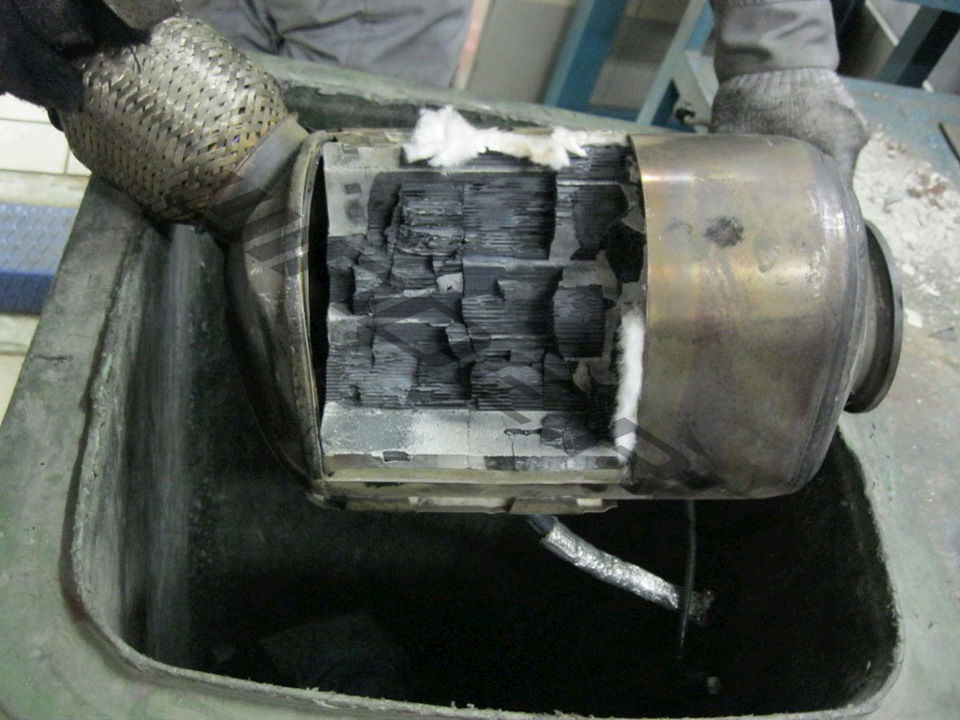
- Melted DPF substrates
- Cracked monoliths
- Severe exhaust restriction
- Turbocharger damage
- Thermal runaway inside the filter
- Underbody heat damage
- In severe cases, vehicle fires
We recently heard of a garage resetting DPF values simply so the vehicle would allow regeneration again after repeated failed attempts.
That is effectively a one-way ticket to destroying the DPF.
Once the substrate melts internally, the restriction level increases massively and the filter often becomes completely unrecoverable.
At that point what started as:
“A £20 glow plug fault…”
…turns into a four-figure repair bill.
# Why “DPF Deletes” Often Don’t Fix the Vehicle
Eventually many vehicles reach the internet’s favourite “solution”:
“Delete the DPF.”
So the vehicle gets:
- Mapped out
- Fault-code suppressed
- Regeneration strategy disabled
- Sometimes physically gutted internally
…but the original engine fault is STILL there.
We regularly see vehicles AFTER DPF deletes that still:
- Smoke excessively
- Run rough
- Over-fuel
- Produce abnormal soot levels
- Suffer turbocharger problems
- Return poor MPG
- Feel flat under load
Why?
Because deleting the symptom is not the same as fixing the cause.
A mapped-out DPF does not repair:
- Failed glow plugs
- EGR cooler faults
- Injector imbalance
- Thermostat problems
- Combustion inefficiency
- Turbocharger faults
The underlying issue remains.
# What We Check Before Condemning a DPF
At Prestige Performance Group we always recommend proper live-data diagnostics before replacing or condemning a DPF system.
We check:
- Differential pressure readings
- Exhaust gas temperatures
- Glow plug operation
- Regeneration history
- Calculated soot load
- Injector correction values
- EGR flow behaviour
- Thermostat operation
- Intake contamination
- Turbocharger efficiency
- Exhaust leaks
- Tailpipe soot levels
Because proper diagnosis matters.
# Diagnostics First. Guesswork Last.
Too many modern diesel vehicles are getting:
- Parts thrown at them
- Endless forced regenerations
- Cheap software deletes
- Generic “DPF solutions”
…instead of actual diagnosis.
The reality is many DPF systems can still be recovered if the ROOT CAUSE is identified early enough.
Before replacing expensive components unnecessarily, we strongly recommend carrying out proper emissions diagnostics and live-data analysis first.
Useful links:
Diagnostics first.
Guesswork last.


Comments